
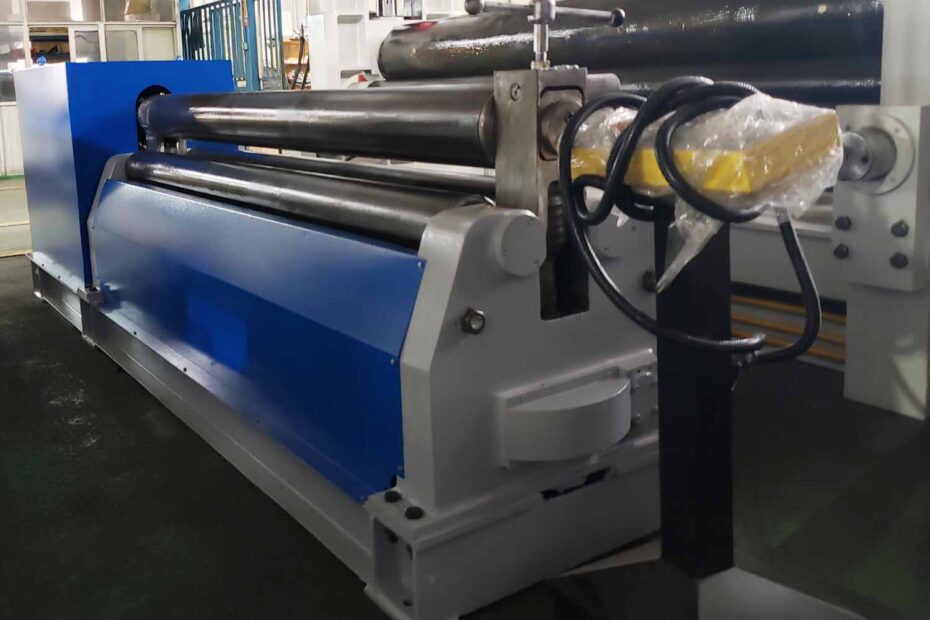
A plate Rolling machine is a metal forming machine designed to roll flat metal sheets into curved shapes. Based on the three-point Rolling principle, it changes the relative positions of the rollers while rotating the workpiece, allowing the metal sheet to undergo continuous plastic deformation. As a result, manufacturers can produce workpieces with precise diameters, radii, and geometries that meet specific engineering requirements.
Among various plate rolling solutions, thethree-roll plate Rolling machineremains one of the most widely used and versatile options in metal fabrication. Manufacturers rely on this equipment to roll steel, stainless steel, aluminum, and other metal sheets into cylinders, cones, arcs, and many other custom profiles. Thanks to its reliable performance, straightforward structure, and broad processing capabilities, the machine has become an essential piece of equipment across numerous industries.
What Is a Three-Roll Plate Rolling Machine?
A three-roll plate Rolling machine, also known as athree-roll rolling machine, consists of three precisely positioned rollers that gradually bend flat metal plates into the desired shape. During operation, the rollers apply controlled pressure while rotating the workpiece, creating permanent plastic deformation without compromising the material’s structural integrity.
By adjusting the position of the rollers, operators can accurately control the Rolling radius, diameter, and final geometry of the workpiece. The machine accommodates a wide range of plate thicknesses and materials, making it suitable for both standard production and customized fabrication projects.
Compared with many other metal forming methods, a three-roll plate Rollingmachine delivers excellent forming accuracy, high production efficiency, and consistent product quality.
How Does a Three-Roll Plate Rolling Machine Work?
The machine operates according to the three-point rolling principle. Three rollers support and compress the metal sheet while simultaneously feeding it through the machine.
As the rollers rotate, they continuously apply pressure to the plate. This controlled force gradually exceeds the material’s elastic limit, causing permanent plastic deformation. Instead of Rolling the plate in a single step, the machine forms it progressively through multiple rolling passes until it reaches the required curvature.
Operators can easily adjust the roller positions to accommodate different plate thicknesses and achieve various rolling radii. This flexible design enables the machine to manufacture a wide variety of components with high dimensional accuracy and repeatability.
Typical Applications
Modern three-roll plate Rolling machines serve numerous industries that require accurate and efficient metal forming. Common applications include:
- Manufacturing cylindrical shells, pipes, tanks, pressure vessels, and storage silos
- Producing conical sections for industrial equipment
- Fabricating curved structural components for buildings and bridges
- Forming large steel components for shipbuilding and offshore engineering
- Manufacturing equipment for the automotive, aerospace, energy, and heavy machinery industries
Common Problems During Three-Roll Plate Rolling Machine Operation
Although three-roll plate Rolling machines are designed for durability and continuous industrial production, they inevitably experience wear and mechanical fatigue over time. In addition to natural component aging, improper operation, insufficient lubrication, and inadequate maintenance can accelerate equipment deterioration and reduce production efficiency.
Understanding the most common operating problems helps maintenance personnel identify issues early, minimize downtime, and maintain consistent product quality. Below are some of the most frequently encountered faults.
Roller Surface Wear
The rollers are the machine’s core working components. Since they remain in constant contact with metal plates under high pressure, their surfaces gradually wear during long-term operation.
Excessive roller wear can lead to:
- Reduced Rolling accuracy
- Surface scratches on the workpiece
- Inconsistent rolling radius
- Difficulty maintaining dimensional tolerances
Hard materials, abrasive scale, or insufficient lubrication can significantly accelerate roller wear. Regular inspection, proper lubrication, and timely roller regrinding or replacement help maintain forming precision.
Bearing Damage
Bearings support the rotating rollers and allow smooth, stable movement. Over time, heavy loads, contamination, inadequate lubrication, or misalignment can damage the bearings.
Common symptoms include:
- Abnormal noise
- Increased vibration
- Higher operating temperature
- Reduced rolling stability
If operators ignore damaged bearings, excessive friction may eventually damage the roller shafts and transmission system. Replacing worn bearings promptly prevents more expensive repairs.
Hydraulic System Failures
Most hydraulic three-roll plate Rolling machines rely on hydraulic cylinders to position the rollers accurately. As a result, the hydraulic system plays a critical role in Rolling precision.
Common hydraulic problems include:
- Oil leakage
- Pressure loss
- Slow cylinder movement
- Unstable roller positioning
- Hydraulic pump failure
Hydraulic oil contamination, aging seals, clogged filters, and excessive operating temperatures often cause these issues. Regular oil replacement, filter maintenance, and seal inspection keep the hydraulic system operating efficiently.
Transmission System Problems
The gearbox, gears, chains, couplings, and drive motors transfer power to the rollers. Continuous heavy-duty operation gradually wears these transmission components.
Typical signs of transmission problems include:
- Unusual mechanical noise
- Slipping during rolling
- Reduced rolling speed
- Irregular roller rotation
Routine lubrication, gear inspection, and proper alignment help maintain efficient power transmission and reduce unexpected failures.
Electrical System Faults
Modern three-roll plate Rolling machines incorporate electrical control systems, sensors, PLCs, servo drives, and safety devices to improve automation and operational accuracy.
Electrical failures may include:
- Sensor malfunction
- PLC communication errors
- Motor overload
- Cable damage
- Control panel alarms
Loose electrical connections, dust accumulation, moisture, voltage fluctuations, or component aging commonly trigger these problems. Regular electrical inspections reduce the risk of unexpected shutdowns.
Insufficient Rolling Accuracy
Even when all machine components function normally, operators may still experience inconsistent Rolling accuracy.
Possible causes include:
- Incorrect roller adjustment
- Improper plate positioning
- Uneven material thickness
- Roller wear
- Hydraulic pressure instability
- Machine frame deformation
Operators should carefully calibrate the machine before production and verify material specifications to ensure consistent forming quality.
Excessive Machine Vibration
Abnormal vibration often indicates an underlying mechanical issue rather than an isolated fault.
Common causes include:
- Worn bearings
- Unbalanced rollers
- Loose fasteners
- Gear damage
- Poor machine foundation
- Shaft misalignment
Ignoring excessive vibration not only affects product quality but also accelerates fatigue in other machine components. Early diagnosis prevents secondary damage and extends equipment life.
Overheating
Overheating can occur in hydraulic systems, bearings, motors, or gearboxes during prolonged heavy-duty operation.
Typical causes include:
- Insufficient lubrication
- Overloaded operation
- Poor cooling performance
- High ambient temperatures
- Internal mechanical friction
If operating temperatures exceed recommended limits, machine performance declines while component wear increases significantly. Monitoring temperature and performing routine maintenance help prevent thermal damage.
Why Regular Maintenance Matters
A well-planned preventive maintenance program, combined with proper operator training and regular equipment inspections, significantly improves machine reliability, extends service life, and ensures consistent production quality. Investing in routine maintenance ultimately reduces overall operating costs while maximizing equipment performance.
Conclusion
A three-roll plate Rolling machine is one of the most versatile and indispensable machines in modern metal fabrication. By utilizing the three-point rolling principle, it transforms flat metal sheets into cylinders, cones, arcs, and other complex shapes with excellent precision and efficiency.
Regular maintenance not only improves operational efficiency and ensures consistent product quality but also extends the machine’s service life while reducing maintenance costs.